Section 04
Overclocking, Plainly
The words, the physical limits and the real risks of running a part beyond its rated clock, written without settings and without promises.
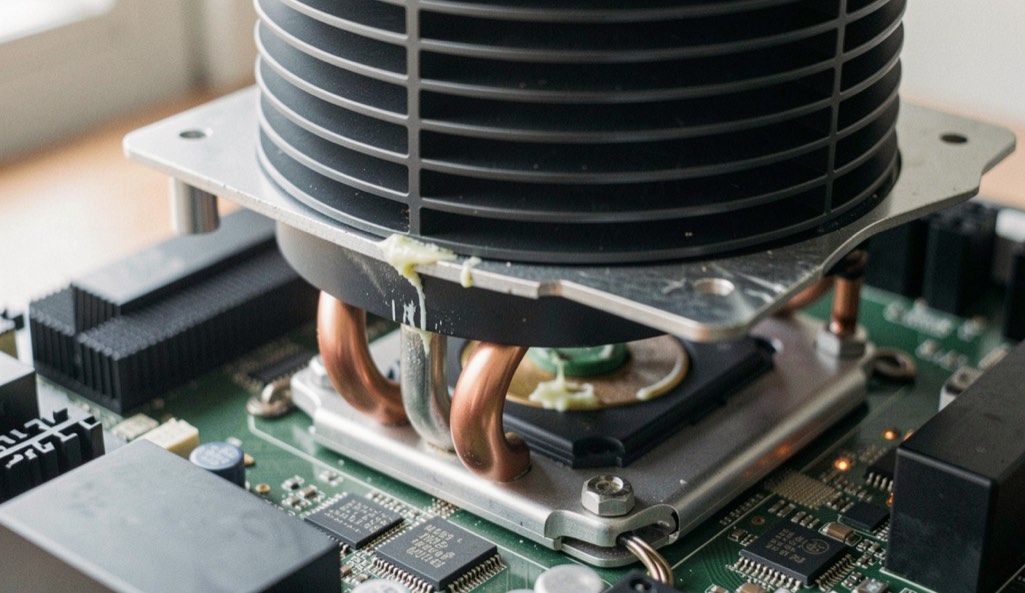
Overclocking is running a part faster than the clock it was sold with. Everything else in the subject follows from that one sentence and from the two things it costs: more heat, and less margin against error. The rest of the vocabulary exists to describe how the clock is raised and how the part is kept alive while it runs.
The vocabulary defines multiplier, base clock, voltage, offset and the rest, once, with the confusion each term usually causes. Thermal headroom explains why cooling, not the number in the firmware, sets the practical ceiling on almost every modern part. What you actually risk is the page this section exists for, and it is not written as a disclaimer at the bottom of something else.
Why there are no settings on this site
You will not find a table of voltages here, and that is a deliberate editorial decision rather than caution for its own sake. Two chips with the same model number do not behave identically, the board and its firmware change what a given setting means, cooling changes what the part does with it, and ambient temperature changes that again. A voltage copied from a web page and applied to a different machine is the single most reliable way to damage hardware slowly, which is the worst kind of damage because it looks like bad luck six months later.
What a page can do is explain the mechanism, name the limit that will actually bite first, and describe how to find your own answer by moving one variable at a time and testing it. That method is the whole of the stability testing section.
Warnings belong next to the thing they warn about
Sustained voltage above a part's rated range degrades it, and the damage accumulates rather than announcing itself. Removing a thermal or power limit removes a protection that was doing a job. Firmware updates can reset settings, and a machine that has been tuned is a machine that needs its settings rechecked after one. Those statements are not a footer notice on this site: they sit in the sentence that describes the action, because a warning at the bottom of the page is a warning nobody reads.
Where this section connects
Every tuning change has to be verified, which sends the reader to what a stress test proves, and every verification has to be read correctly, which sends them to the test matrix. The words used throughout are defined once in the glossary.
The other sections of the desk: Stability Testing, Diagnostics, Live Systems and The Log. Every one of them comes back to the test matrix.
In this section
4 pages in this section, newest first.
-
The Vocabulary of Overclocking
Most overclocking arguments are vocabulary arguments. Six terms carry almost all of the misunderstanding.
-
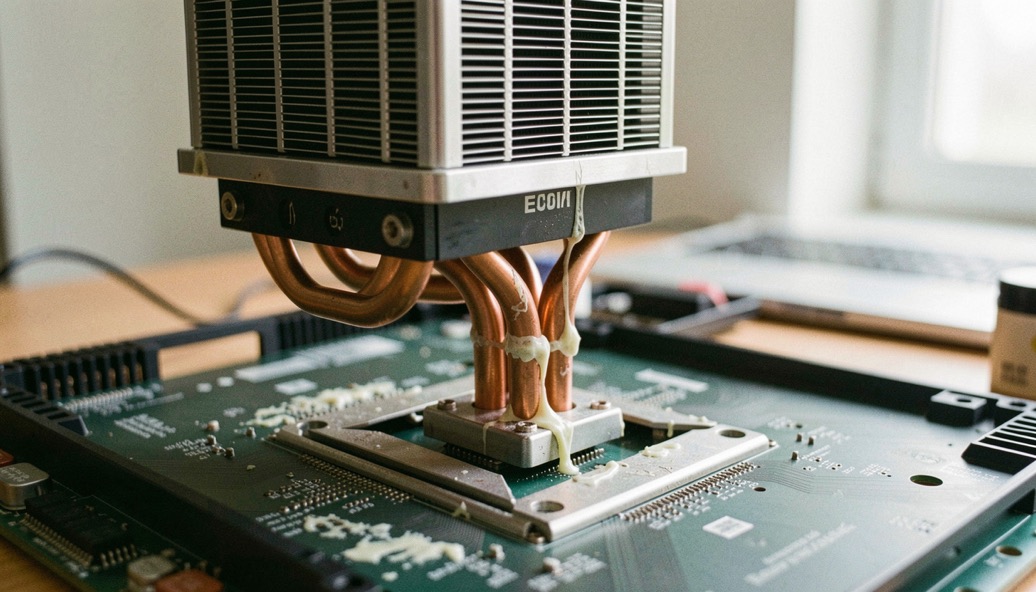
Thermal Headroom Sets the Real Ceiling
The limit that bites first is almost never the one people are trying to raise. It is the heat the part can shed.
-
What You Actually Risk, Stated Plainly
The damage that matters most does not announce itself. It accumulates, and it looks like an unrelated problem six months on.
-

Glossary of the Bench
Every term on this desk is defined here once, in the sense this publication uses, with a note on where that sense differs from common use.