Method
Sources and Method
Every precise figure on this site carries the document it came from and the date that document was read. This page is the procedure behind that.
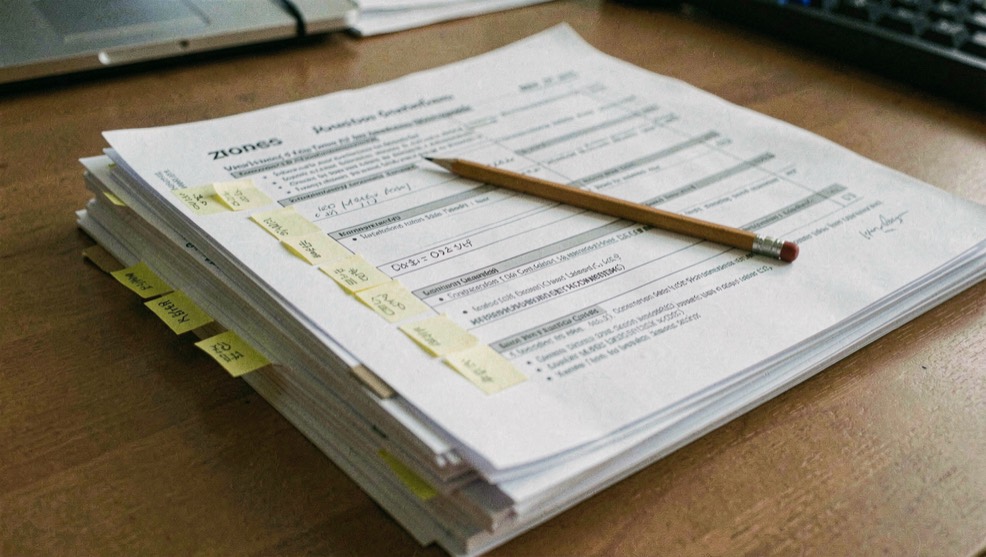
Every page on this desk rests on documents written by other hands, and the difference between a fact and a rumor is mostly bookkeeping: who stated it, on what page, and on what day that page was read. This page sets the bookkeeping out, including the cases where it gets awkward.
A source is a document, not a project
This desk is not the Overclockix project and serves none of its files. It holds a record of the project, and that record is built from documents by different authors: a version table on DistroWatch, a code repository last pushed on May 31, 2015, and an archive index of this domain. Each is cited as what it is. The release record describes the documents, the documents describe the project, and the distance between the two is kept on purpose.
Why does every figure carry a date?
"Last release 7.8.0" on its own is decoration. "Last release 7.8.0, dated June 1, 2015, stated by DistroWatch, on a page whose own last update is February 8, 2026, read on September 5, 2026" carries handles, and each handle does a different job. The release date belongs to the software, the page update belongs to the publisher, and the read date belongs to this desk. Drop any one of the three and the reader can no longer tell a statement about a project from a statement about the source that described it.
When two sources disagree, the date decides
The LiveCD List called Overclockix active in a card updated December 21, 2013. DistroWatch lists the project as discontinued. Both statements survive because both are dated, and neither has to lose for the other to win. The same version table places 3.79, released August 25, 2005, after 3.8, released April 2, 2005, because it orders by date rather than by number. Reprinting that order without the reason would produce a column that looks wrong and is not.
| Document | What it states | Its own date |
|---|---|---|
| DistroWatch version table | Versions from 3.2, November 11, 2003, to 7.8.0, June 1, 2015; Debian base; status discontinued | Page updated February 8, 2026 |
| The LiveCD List card | Last stable version .018, October 12, 2013; media CD and USB flash drive | Card updated December 21, 2013 |
| ArchiveOS card | Domain recorded as not active; 7.8.0 of June 1, 2015 as last version | Published November 23, 2019, updated August 23, 2023 |
| Phoronix article | Version .017, first on Debian Wheezy; project revived in 2011 after falling apart in 2005 | Dated May 7, 2013 |
| Code repository | The source of the distribution itself, for i386 and amd64 | Created June 10, 2013, last push May 31, 2015 |
| Archive index of this domain | 1,513 distinct addresses captured with status 200, the project's own tree among them | Captures from 2005 to 2025 |
What a bot check does to a citation
One fetch made while preparing the storage pages came back as a document titled "Making sure you're not a bot!" with a loading notice and no content behind it. That capture says nothing about the tool it was meant to document; it says the fetch was stopped. The handling is plain. Nothing is quoted from a page that said nothing, the gap stays visible, and any claim that was going to lean on it is rewritten to stand without it, or dropped.
What the memory pages borrow from the Memtest86+ site
The memory section leans on the Memtest86+ project site for statements this desk cannot make on its own authority: that the tool is free and open source under the GNU GPL v2.0, that its v6 code base began as PCMemTest by Martin Whitaker on the v5 line of Sam Demeulemeester, and that it is not an edition of the closed-source Memtest86 owned by PassMark since 2013. The same site states that its nightly builds are generated automatically and are fully untested, which is exactly the kind of sentence a stability page needs and cannot invent. What this desk does not repeat is the download table or the changelog. A reader who wants the v8.10 list of fixes reads it there; a reader who wants what a memory pass covers reads it here.
How does a correction happen?
A correction replaces the sentence and keeps the trace. ArchiveOS recorded this domain as not active in a card updated August 23, 2023; the statement stays, held to its day, and is never quietly updated into a description of this site. When a figure turns out to be wrong or a read date is missing, the page changes and the change is dated. A reader who finds a claim this desk cannot trace can write to the desk. The rest of the method fits in one line: date the figure, name the source, and when a document is silent, say so in print.
memtest.org
- The site of Memtest86+, a free, open-source, stand-alone memory tester for IA-32, x86-64 and LoongArch64 systems, released under the GNU GPL v2.0 and runnable from a legacy BIOS or a UEFI.
- It states the licensing split with the closed-source Memtest86, the lineage of the code from PCMemTest back to Chris Brady's MemTest-86 of 1994, and the changelog of the current version.
- It labels its nightly builds fully untested, a warning the desk repeats rather than softens.